Home › Site Concrete and Civil Works
Complete your project with site concrete in Las Vegas, NV that ties buildings, parking, and utilities together. We install curbs, aprons, dumpster pads, generator pads, and other civil concrete elements according to plans. Our team coordinates with general contractors and other trades for efficient sequencing. Request pricing for site concrete on your next project.
Superior Concrete Las Vegas provides professional site concrete throughout Las Vegas, NV, Nevada and the surrounding area. Our licensed, insured crew delivers safe, clean, on-time work with a free estimate before anything begins. Call (725) 307-4971 or request your free quote.
Site Concrete and Civil Works in Las Vegas, Built for Desert Conditions
Site concrete in Las Vegas is not just pouring gray slabs. It is the full package of exterior concrete and small civil works that make a property functional, safe, and compliant with local codes. Superior Concrete Las Vegas handles this scope for commercial sites, multi‑family developments, HOA communities, and custom residential projects across the valley.
When we say site concrete, we are typically talking about flatwork and structural concrete that supports how people and vehicles move: parking lots, drive aisles, trash enclosures, ADA ramps, walkways, curbs, gutters, equipment pads, and localized drainage features. On the civil side, we coordinate with grading, utility trenching, and stormwater management so that the concrete ties in correctly to the overall site plan.
In Southern Nevada, the combination of intense sun, big temperature swings between day and night, and occasional heavy downpours means concrete details matter. Mix design, joint layout, base preparation, and drainage slopes must be right, or you will see early cracking, ponding, or heaving. Superior Concrete Las Vegas structures every project around those realities instead of relying on generic methods pulled from cooler or wetter climates.
How We Plan and Layout Your Site Concrete Project
Every site starts on paper. We review your civil drawings, structural details, and any municipality or NDOT requirements that apply to your parcel. For smaller projects without engineered plans, we field‑measure, shoot elevations where needed, and produce a simple layout sketch that shows slabs, curbs, ramps, and expansion joints. The goal is to catch conflicts early, such as mismatched elevations between existing asphalt and new concrete.
Next, we verify subgrade conditions. Las Vegas soils often include caliche pockets and loose fill from previous work. We probe the subgrade, check compaction where required, and call out any remediation before pricing is finalized. If we find soft spots, we will recommend re‑compaction, soil stabilization, or over‑excavation with imported base. This step is what keeps slabs from settling or cracking along vehicle paths.
Layout on site is done using string lines, chalk, and laser levels to confirm slopes. For ADA ramps and accessible routes, we measure slopes during layout so that we hit the 2 percent and 8.33 percent maximums where they apply and avoid costly corrections after inspection. In older parts of Las Vegas, tying into existing, out‑of‑tolerance sidewalks can be tricky. Superior Concrete Las Vegas will either design transition panels or suggest where removal and replacement is more cost‑effective than patching around bad concrete.
Materials, Mix Designs, and Details That Stand Up in Las Vegas
Not every concrete mix performs the same in desert heat. For most site concrete in Las Vegas, we specify at least 4,000 psi concrete with low water‑cement ratios for durability and reduced shrinkage. In high‑traffic drive lanes, dumpster pads, and fire access routes, we usually step that up to 4,500 or 5,000 psi and increase slab thickness to handle point loads from trucks.
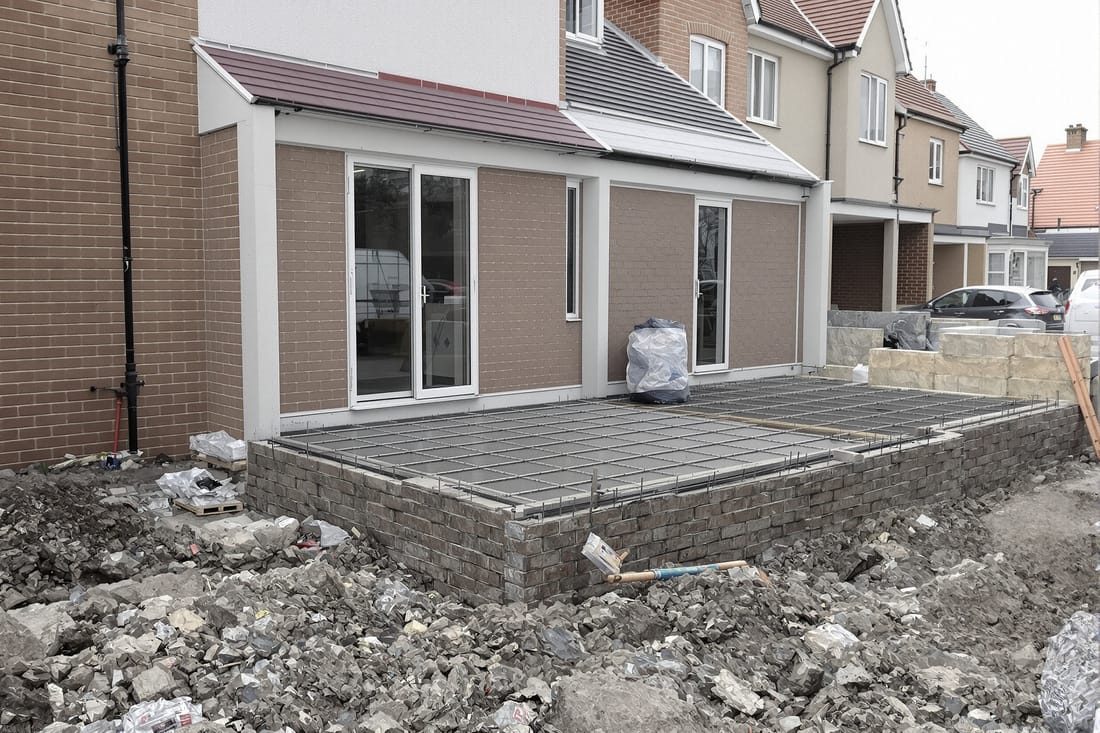
To control cracking, we combine proper joint spacing with reinforcement that fits the use. For pedestrian walks, we typically use fiber‑reinforced concrete and well‑planned control joints. For parking lots and drive aisles, we may add #3 or #4 rebar on a grid or welded wire mesh, depending on engineering and budget. In areas with frequent water exposure, like near car washes or water features, we suggest air‑entrained mixes and sometimes surface hardeners for abrasion resistance.
Finishes are chosen based on slip resistance, glare, and maintenance. Broom finish is standard for sidewalks and ramps for traction in rare rain events. For decorative entries or plazas, we can provide exposed aggregate, integral color, or saw‑cut patterns, but we still respect drainage and joint layout first. Sealers are recommended in high‑profile areas to reduce staining from tire marks and desert dust. Superior Concrete Las Vegas also addresses heat by avoiding very dark integral colors where people will walk barefoot, such as around pools or courtyards.
Execution in Extreme Heat: Scheduling, Pouring, and Curing
Timing pours around Las Vegas weather is critical. From roughly May through September, we schedule most site concrete pours in the early morning, often starting at or before sunrise. This gives us cooler temperatures for placement and finishing, reduces plastic shrinkage cracking, and helps finishing crews avoid rushed work as the surface sets too fast.
We use set‑control admixtures when ambient temperatures or wind speeds are high, and we watch evaporation rates to decide when to start curing. Finishing is kept consistent across the slab to avoid weak spots, and we do not overwork the surface with excessive water, which can weaken the top layer. On windy days, especially common in the valley, we may use windbreaks or adjust pour size to keep curing manageable.
Curing is not optional in this climate. Superior Concrete Las Vegas uses curing compounds, wet curing with blankets, or a combination, depending on project specifications. Proper curing reduces surface dusting, early‑age cracking, and color inconsistency on decorative work. We also clearly mark off newly poured areas and coordinate with other trades so no one drives or stores materials on fresh slabs before they reach required strength.
The best seasons for larger site concrete and civil packages are fall and early spring, when temperatures are moderate and weather is more predictable. That said, with the right planning and admixtures, we can deliver quality work year‑round; we simply plan approach and crew size around seasonal conditions.
Costs, Common Problems, and How We Prevent Them
The cost of site concrete in Las Vegas is driven by thickness, reinforcement, access, and what has to happen before and after the pour. A simple 4 inch sidewalk replacement with good access is very different from a heavily reinforced dumpster pad in a tight alley that requires sawcutting, demolition, and haul‑off. We itemize our proposals so you can see how much each part of the work adds to the total.
Subgrade correction, extra base, and drainage improvements are common cost drivers that many property owners do not anticipate. For example, adding a few catch basins and proper grading might be more expensive up front, but it prevents water from ponding against buildings or creating icy spots in rare freezing events. Superior Concrete Las Vegas always points out where cuts can be made without risking performance, and where cutting cost will almost certainly create future problems.
Frequent problems we are called to fix from previous work include uncontrolled cracking from poor joint layout, settled slabs at dumpster enclosures because the base was not compacted, and non‑compliant ramps that fail ADA inspections. Our approach is to diagnose the root cause instead of just resurfacing or patching. In many cases, full‑depth removal and replacement of a small area is cheaper long term than repeated patching that never addresses poor base or grade.
We also review your planned usage. If you expect heavier vehicles in the future, such as food trucks, delivery vans, or fire apparatus, we can adjust thickness and reinforcement now, when it is far cheaper than cutting and re‑pouring later.
Permits, Inspections, and Working Around Active Properties
Site concrete and civil works in Las Vegas typically require permits and inspections, especially inside city limits or in Clark County. Superior Concrete Las Vegas coordinates with your design team or uses local standards to ensure our work will pass review for thickness, reinforcement, compaction, and ADA compliance. We schedule inspections for forms, rebar, and final placement when required, and we stay on site to address any inspector questions.
For commercial centers, apartment communities, and HOA neighborhoods, work zone planning matters as much as the concrete itself. We stage the project in phases so that customers, tenants, or residents still have safe access while areas are being demolished and re‑poured. Temporary ramps, clear signage, and safe pedestrian routes are part of our standard process.
Dust, noise, and debris are always managed aggressively. Cutting and demolition create silica dust, so our crews use wet‑cutting methods and proper containment. We haul broken concrete to approved facilities, not to open desert areas, and we keep work areas clean so property managers are not dealing with complaints from neighboring tenants.
Before we mobilize, we walk the site with you, confirm work limits, and identify utilities, irrigation lines, and any unknowns like shallow conduits that often show up in older Las Vegas developments. This upfront coordination helps prevent surprises and change orders, and it keeps your schedule realistic from the beginning.